
exFAT Recovery
Recover files from exFAT drives, USB sticks, and SD cards that are RAW, corrupted, formatted, unreadable, or not mounting.
Written by the Refindo Recovery Team · Updated
exFAT recovery starts by leaving the drive exactly as it is. exFAT is the cross-platform format for large USB drives, SD cards, and external SSDs, and because it has no journaling, an unsafe eject or power loss mid-write can leave it RAW, unreadable, or asking to be formatted while the files are still intact. If macOS or Windows can still detect the device, Refindo can scan the exFAT volume, preview recoverable files, and recover them to a separate destination before any repair or format rewrites the structure.
What this covers
- For exFAT drives that are RAW, corrupted, formatted, unreadable, not mounting, or showing as empty
- Covers exFAT on USB flash drives, SD and microSD cards, external HDDs, and portable SSDs
- Works on both Mac and Windows, since exFAT is the shared cross-platform format
- Quick Scan for readable volumes with missing files, Deep Scan for RAW or formatted volumes
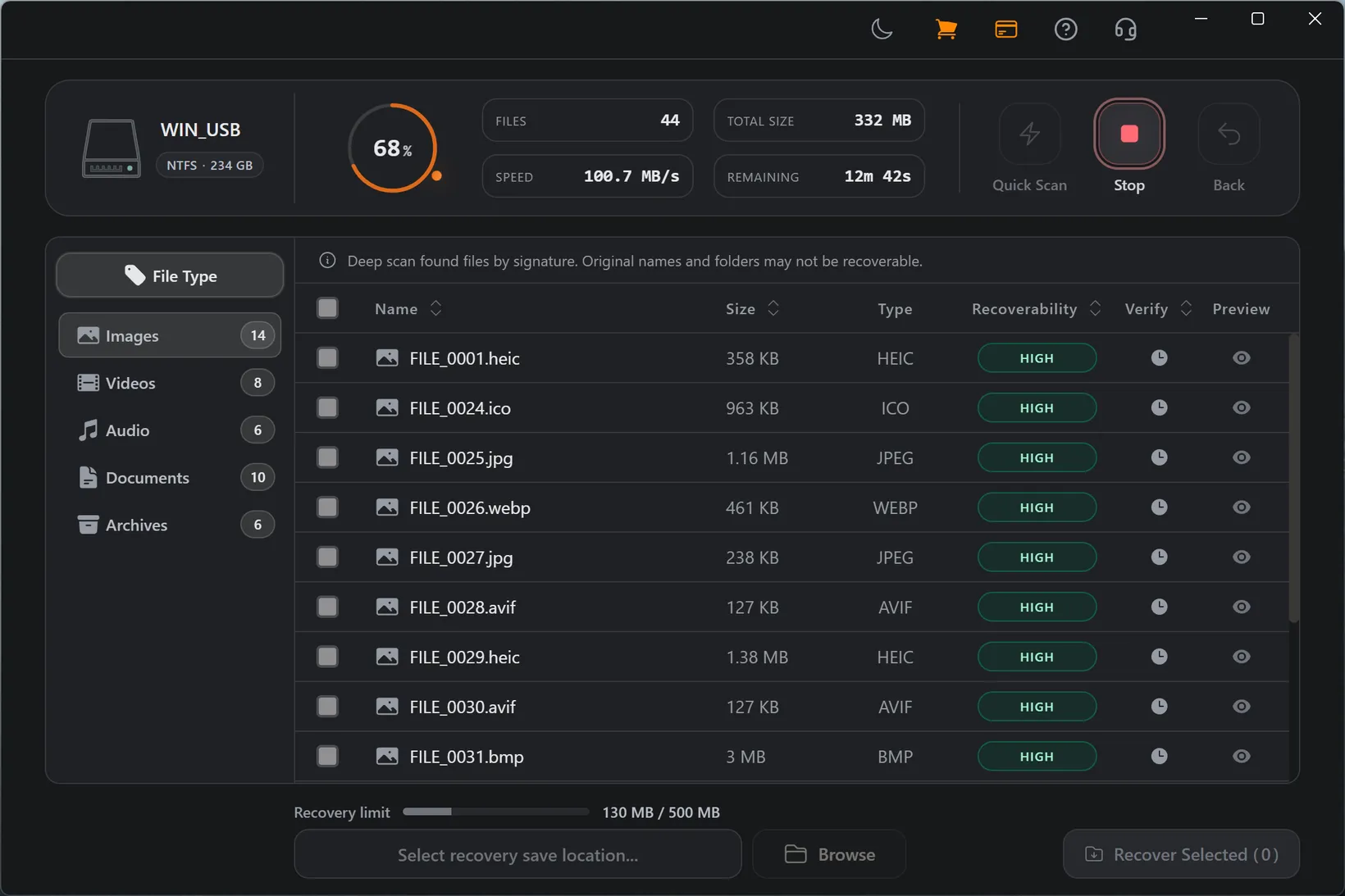
- Preview images, PDF, text, and selected Office files before recovery
- Local-first recovery workflow with no cloud upload during scan or preview
Match the symptom before you format
The safest exFAT recovery path depends on what the drive is doing right now. A RAW volume, a formatted card, and a drive that will not mount each need a different first step, so start with the exact symptom before running repair tools or accepting a format prompt.
Recovery Workflow
- Stop using the exFAT drive and cancel any prompt asking to format it.
- Check whether the drive appears in Disk Utility, Disk Management, or System Information.
- Run Quick Scan first when the volume is still readable and only files are missing.
- Use Deep Scan for RAW, formatted, unreadable, or unmountable exFAT volumes.
- Preview important files and recover them to another drive, not back to the source.
Best Practices
- Never accept the "needs to be formatted" prompt on a drive with files you still need.
- Connect SD cards through a reliable reader and external drives directly or via a powered hub.
- Avoid First Aid, CHKDSK, format, or partition repair on the exFAT source before scanning.
- Recover to a separate disk to avoid overwriting unrecovered data on a flash drive or card.
Why exFAT volumes go RAW or ask to be formatted
exFAT trades safety for simplicity. It has no journal, so the file system has no way to roll back a half-finished write. Pull a USB stick during a copy, lose power to an external drive, or eject an SD card without unmounting, and the directory table or boot region can be left in an inconsistent state. The operating system then refuses to trust the volume and reports it as RAW, unreadable, or in need of formatting.
The important part is that this is almost always a metadata problem, not a data problem. The actual files usually still sit untouched in their original sectors. Formatting the drive to clear the error writes a fresh, empty file system over them, which is the one action most likely to turn a recoverable case into a lost one.
- A RAW or unformatted exFAT volume has usually lost its header or directory table, not its files.
- No journaling means an unsafe eject or power loss can corrupt the structure instantly.
- Cancel format prompts and scan before doing anything that writes to the drive.
exFAT lives on flash storage, so move quickly
Most exFAT drives are flash based: USB sticks, SD and microSD cards, and portable SSDs. That matters for recovery timing. On an SSD or USB drive that supports TRIM, the controller can clear freed blocks in the background after a deletion, and once that happens the data is gone for good. Cards and sticks are also small and easy to keep using by reflex, which is exactly how recoverable data gets overwritten.
Treat the moment you notice the problem as the start of the clock. Set the drive aside, do not save anything else to it, and scan it before you try to repair or reuse it. The less the drive is written to between the incident and the scan, the more a recovery tool can return.
- exFAT is most common on USB flash drives, SD or microSD cards, and external SSDs.
- TRIM on SSDs and some USB drives can erase deleted data quickly, so scan sooner rather than later.
- Stop reusing the card or stick the moment files go missing.
When exFAT recovery needs hardware help
Recovery software handles the file system layer: RAW volumes, formatted cards, deleted files, and unmountable exFAT partitions are all cases where the hardware is fine and only the structure is broken. A scan reads the sectors and rebuilds what the directory no longer describes.
A physically failing device is different. An SD card that is not detected at all, a USB stick that gets hot or disconnects repeatedly, or an external drive that clicks or reports the wrong capacity points to a hardware fault, and repeated scans can make it worse. When the device itself is unstable, stop and have it handled professionally instead of running another pass.
- Use software for RAW, formatted, deleted, or unmountable exFAT volumes.
- Get hardware help for cards or drives that are undetected, overheating, clicking, or disconnecting.
- On a large or unstable drive, recover the most important files first.
Choose the Right exFAT Recovery Path
exFAT drive shows as RAW or unformatted
When an exFAT volume reads as RAW or triggers a format prompt, the file system header is damaged but the data underneath is usually intact. Do not format it to make it accessible, since that overwrites the old structure with an empty one. Run a Deep Scan on the drive instead. It reads past the broken exFAT metadata and rebuilds files from their content, and you save everything it finds to a separate destination.
exFAT card or stick was formatted
A quick format on an exFAT SD card or USB stick clears the directory table but leaves the file data in place until new writes land on top of it. Stop using the card immediately. A Deep Scan can recover photos, videos, and documents by signature, often with usable previews, as long as nothing new has been written since the format.
exFAT external drive will not mount
When an exFAT external drive is detected in Disk Utility or Disk Management but the volume will not mount, the temptation is to run First Aid, chkdsk, or repeated mount attempts. Each of those can rewrite the structures a scan still needs. Take a read-only scan of the current state first, recover what matters to another disk, and only then run the repair tools that make the volume usable again.
exFAT mounts fine, but files are gone
If the drive mounts normally and files just vanished after a deletion or a failed transfer, the clock starts the moment you notice. Stop writing to the drive, because continued use is what overwrites recoverable data. Quick Scan gives the best shot at getting files back with their original names while the directory survives; Deep Scan reaches more content when the directory layer is already incomplete.
Frequently Asked Questions
Can I recover files from an exFAT drive that turned RAW?
Often, yes. A RAW exFAT volume has usually lost its file system header or directory table, not the file data underneath. As long as the drive is still detectable, a Deep Scan can read past the broken structure and rebuild files by their content. Do not format the drive to "fix" it before scanning.
My exFAT drive says it needs to be formatted. Should I format it?
No, not if the files matter. The "you need to format the disk before you can use it" prompt means Windows or macOS cannot read the exFAT file system, but the data is usually still there. Cancel the prompt, leave the drive untouched, and scan it before formatting.
Why does exFAT corrupt so easily?
exFAT has no journaling, so an unsafe eject, power loss, or disconnect mid-write can leave the directory table half-updated. The drive then shows as RAW, unreadable, or empty even though the underlying files are intact, which is exactly the case recovery software is built for.
Does exFAT recovery work on both Mac and Windows?
Yes. exFAT is the common cross-platform format for large USB drives, SD cards, and external SSDs, and Refindo scans exFAT volumes on both macOS and Windows. Recover the files to a separate drive regardless of which system the exFAT drive was used on.
Should I use Quick Scan or Deep Scan for exFAT?
Start with Quick Scan when the volume is still readable and only files are missing. Use Deep Scan for RAW, formatted, unreadable, or unmountable exFAT volumes, where the directory layer is damaged and files must be rebuilt by signature.
Can I recover files back to the same exFAT drive?
No. Recover to a different drive. Writing recovered files back to the exFAT source can overwrite the very data you have not recovered yet, especially on a flash drive or SD card.
Start with a free scan
Check recoverable files first, then decide whether to proceed with recovery, and save results to a separate drive.